

Quick answer
Handle the things that can ruin an otherwise good Tuesday.
You bought this home to be comfortable in it, not to spend your first month chasing a water bill, waiting for Wi-Fi, or wondering whether the insurance actually started. Get power, water, internet, trash pickup, mail, payments, coverage, and secure access settled first. Now, there's a lot to do here, but you can make it easier by downloading the Homekeepr app, and we'll build and store this for you with custom actions and insights.
The first-week setup
Get the boring-but-important stuff handled, then enjoy the place
These five groups cover most of the calls, logins, dates, and documents that new homeowners end up hunting for later. Set them once, keep the details somewhere useful, and get back to making the house feel like yours.
A paid "home warranty" is generally a service contract, not the same thing as a builder or manufacturer warranty. Compare its coverage, exclusions, fees, and claims process before assuming it will pay for a repair. Read the FTC home-warranty guidance
First 90 days
The 30-step new homeowner checklist
Do not try to finish all 30 in one heroic weekend. Use the timing as a sequence, move any active leak or safety issue to the front, and check things off as life allows. Your progress is saved in this browser.
A checklist that leaves with you
Email me the first-90-days PDF
Get the printable checklist, then receive Weekend Warrior each Friday: one useful plan for the home you actually own.
Turn on what you need and close the obvious gaps
Start here because a dark house, a missed trash day, an insurance gap, or a payment sent to the wrong company is both annoying and completely avoidable.
Use the official USPS change-of-address process, then update important organizations directly; forwarding does not update the address held by your bank, insurer, employer, or DMV. Review USPS change-of-address basics
Set up the routines that make the house easy to live in
This is the part that makes the place feel settled: people can get in, the Wi-Fi works, the alarms are trustworthy, the basics are where you need them, and nobody has to text you to find the water shutoff.
The U.S. Fire Administration recommends smoke alarms inside and outside sleeping areas and on every level, monthly testing, and replacement at 10 years. Local requirements may be stricter. Review USFA smoke-alarm guidance
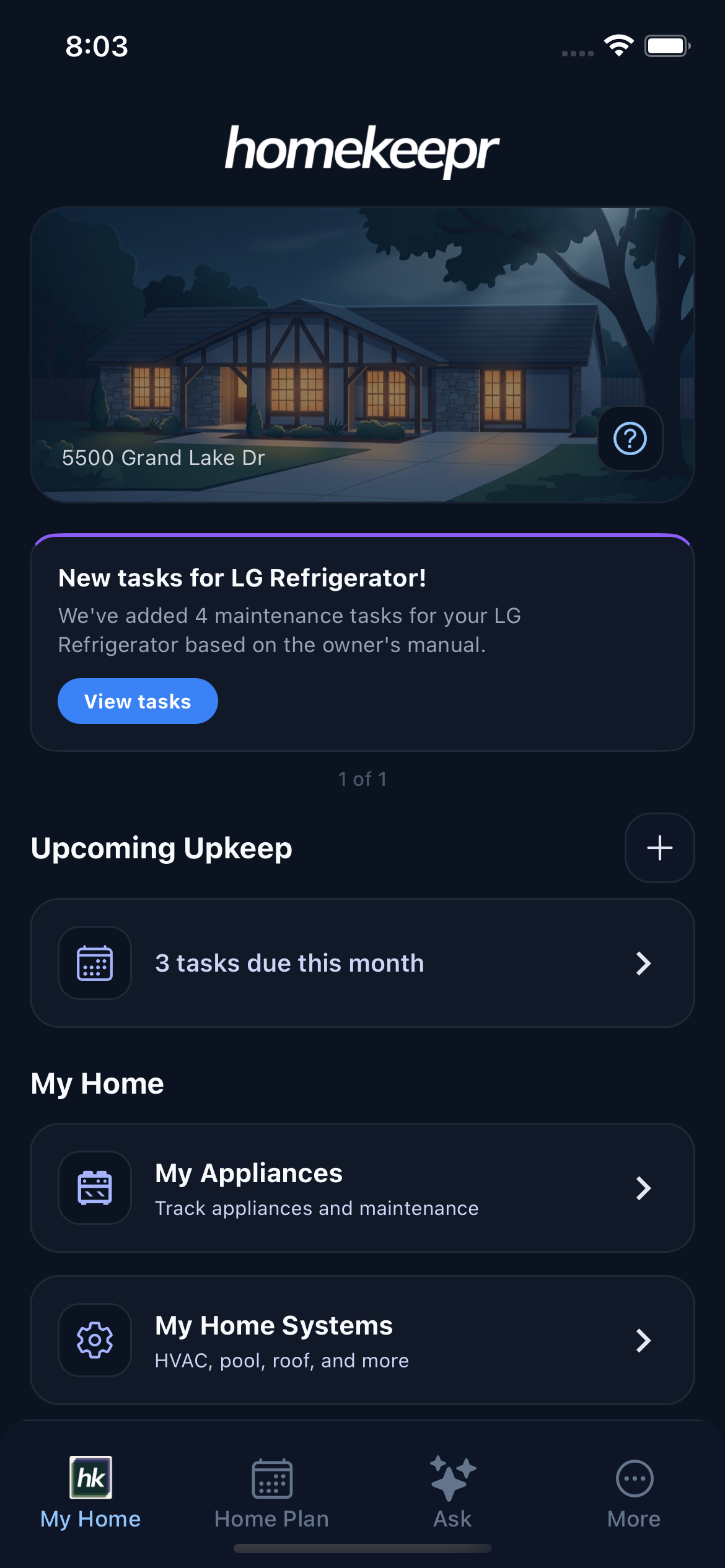
Save the information that keeps you from paying twice
Warranties, model numbers, service history, and the name of the person who already knows the boiler can save real money. Pull that information out of the moving boxes before you need it on a bad day.
Keep the policy declarations page with the claim number and a home inventory. The NAIC notes that it identifies the insured property, policy dates, coverages, limits, premium, discounts, and mortgage holder. Review the NAIC homeowners-policy guide
Learn the few things that could surprise you later
By now you have lived in the house long enough to notice what the inspection could not tell you. Use the report, your first bills, and a few weeks of real life to choose the small number of issues worth your money or attention.
Need a backup plan for basement water? Compare real flow, battery, alerts, and installation fit in Homekeepr Recommends: battery backup sump pumps
Once the house is organized, make severe weather part of the calendar with the Homekeepr severe-storm preparation checklist
Because radon cannot be seen or smelled, follow the test instructions carefully and confirm an elevated result before deciding what to do next. Review EPA radon guidance
From checklist to Homegraph
Your checklist should leave you with fewer things to remember
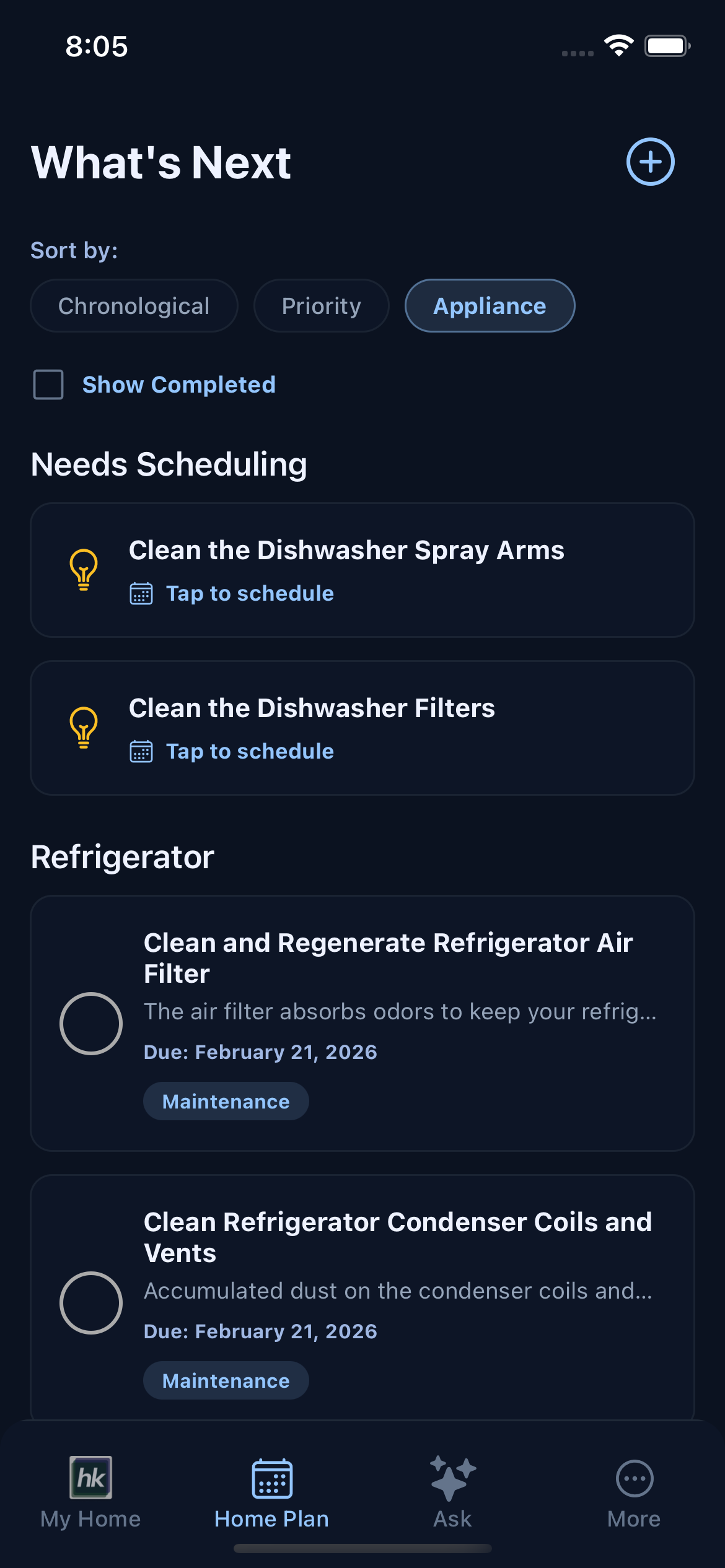
Homekeepr connects each task to the system or appliance behind it. Instead of carrying “deal with the HVAC” in your head, you can keep the exact equipment, filter, manual, service history, and next action with the home.
- Tasks prioritized around the systems in the home
- Model numbers, manuals, warranties, and service records together
- Seasonal reminders that survive the move-in rush
A maintenance reserve built for this house
Build a maintenance budget around your house, not a generic rule
The one-percent rule is easy to repeat, but it has never seen your roof, HVAC, septic system, or local labor rates. Use the equipment and condition you now understand to build a reserve that is useful for your home.
Known annual maintenance / 12 plus near-term replacement estimates / months remaining, while preserving a separate emergency cushion for surprises. Use local quotes and current condition, not a national average presented as a promise.
The Consumer Financial Protection Bureau recommends including maintenance, repairs, utilities, and an emergency cushion when deciding what homeownership costs you can carry. Read the CFPB home-budget guidance
Stop when the task changes from observation to hazard
Leave electrical panels closed, stay off roofs, do not enter standing water, and do not troubleshoot fuel-burning equipment when you smell gas or see combustion concerns. A useful checklist should help you know when to call the right professional.
New homeowner FAQ
What new homeowners ask after closing
What should I do first after buying a house?
Confirm electricity, fuel, water, sewer, insurance, internet, trash pickup, payment accounts, address changes, and secure access. Get daily life comfortable and protected before starting projects.
Which services should be set up before moving day?
Arrange electricity, gas or delivered fuel, water and sewer, internet, homeowners insurance, and any local trash or recycling account that does not transfer automatically.
Is a home warranty the same as a builder or product warranty?
No. A paid home warranty is generally a service contract. Builder and manufacturer warranties cover different promises. Record each provider, term, exclusion, fee, transfer deadline, and claim process separately.
How much should I save for home maintenance?
Start with actual annual service plus near-term replacement needs based on condition, local estimates, and time remaining. Review it every year and keep a separate emergency cushion. If you need a number to work from, take the Homekeepr quiz here.
Do I need to fix everything in the inspection report?
No. Move life-safety issues, active damage, and low-cost prevention to the front. Give each one a next action, then keep comfort and cosmetic work in a separate queue.
What if my first 90 days already passed?
Start now. Handle utilities, services, coverage, address changes, and access first, then work through the rest in order. The shortcut still works even if the calendar got away from you.