

Quick answer
Prepare the house while there is still time to think.
Severe storms rarely damage every house in the same way. One home has a basement and sump pump. Another depends on a private well. One family has a portable generator; another has a whole-home unit that has not been checked in months. A useful storm plan starts with those differences, then works backward from the forecast.
Begin 48 hours out by testing critical systems and locating records. At 24 hours, secure the property and clear water paths. When a warning is issued, stop working on the house and move to life safety. After the storm, document conditions before cleanup and avoid electrical, structural, and carbon-monoxide hazards.
If you are still learning the systems in a recently purchased home, begin with the new homeowner first-90-days checklist
Before the storm
Your 48-hour home preparation checklist
This is a house checklist, not a substitute for an evacuation plan or emergency kit. Complete only the work that can be done safely, and stop outdoor preparation once conditions deteriorate.
Weekend Warrior / Every Friday
Put the storm plan in your inbox.
We will send the three-page PDF now, then one useful email every Friday to help you spend less time figuring out your house.
Start with the systems that fail under stress
Confirm how your sump pump, generator, HVAC, well pump, garage door, and main water shutoff work. Find the manuals now, while the lights are still on.
Protect the outside of the house
Wind turns ordinary yard objects into debris. Water finds blocked drainage. Walk the property once, from the roofline down to the lowest drain.
Shift from property prep to life safety
Once a warning is issued, stop working outside. Move people and pets to the predetermined safe place and keep official alerts audible.
A watch means prepare. A warning means act.
The National Weather Service advises having a predetermined safe place, multiple ways to receive alerts, and a plan that can be activated quickly. Do not wait for a warning to begin exterior work.
National Weather Service guidanceWeather-triggered actions
Let the alert determine the next action
A generic checklist is static. A useful plan changes when the forecast changes. Use these signals as a decision point, then follow instructions from local emergency managers for your location.
From warning to plan
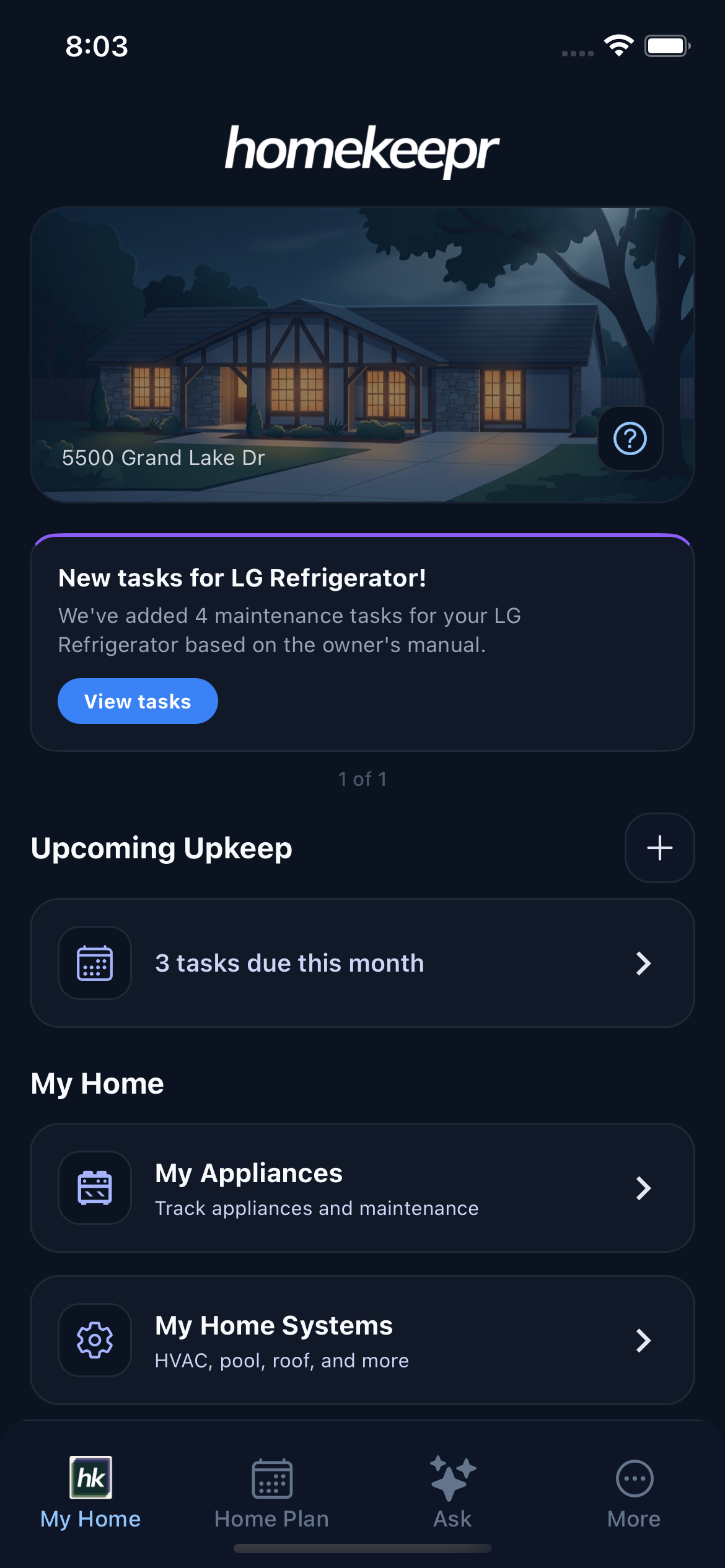
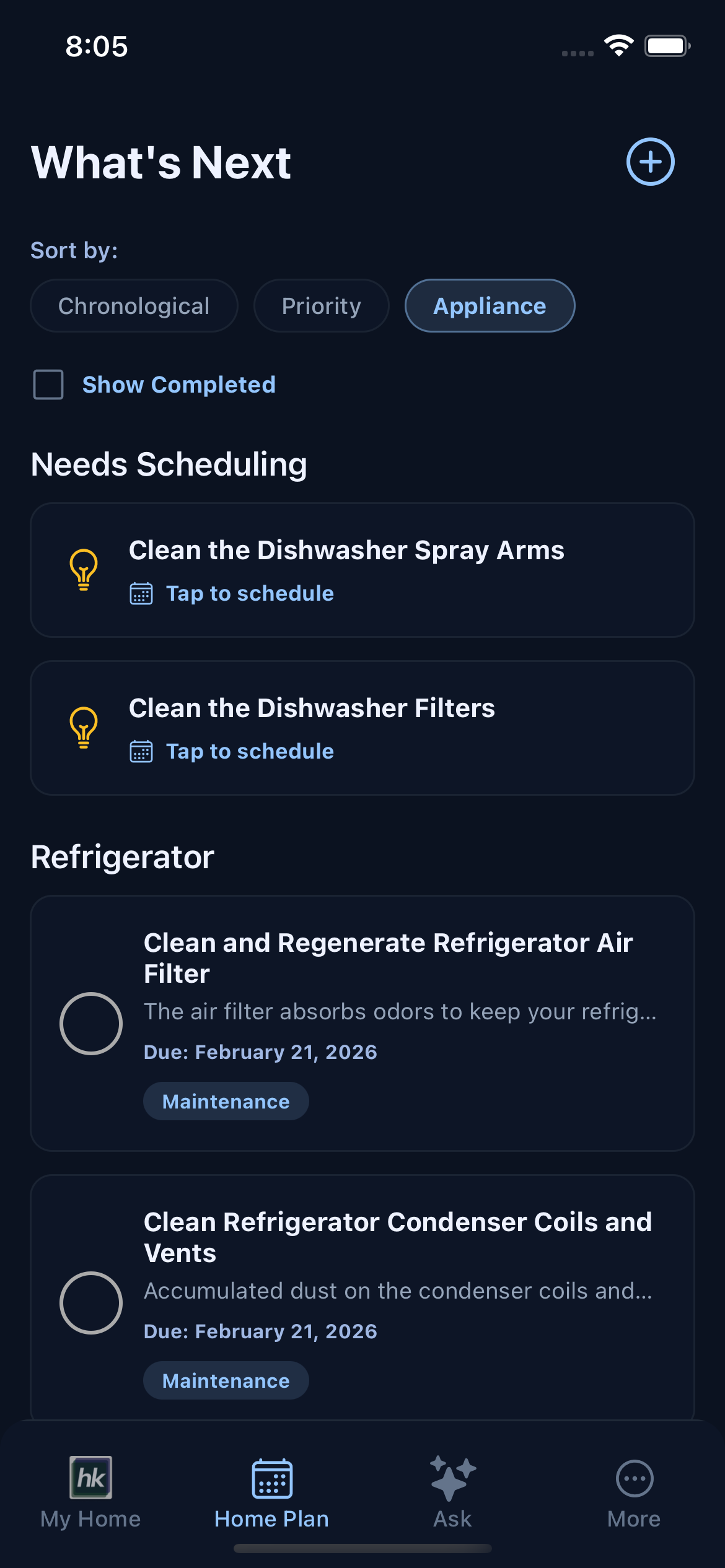
Get a personalized version of this guide in Homekeepr
Homekeepr combines location and weather with the systems recorded in your Homegraph. For example, a coming blizzard could mean specific actions for a home's propane generator and HVAC system, rather than sending another generic weather alert.
- Weather-aware tasks tied to the property
- Manuals, model details, and service records together
Power outages
Backup power introduces a second hazard
Portable generators produce carbon monoxide, an odorless and colorless gas that can kill without warning. The CDC says to keep a portable generator outdoors and at least 20 feet from windows, doors, and vents. Never run one in a home, basement, garage, carport, or other enclosed or partly enclosed area.
Test battery-powered carbon-monoxide detectors before the storm. Use outdoor-rated cords sized for the load, keep the generator dry, and never connect it directly to household wiring without approved transfer equipment installed by a qualified professional.
Read the CDC power-outage guidanceWhat prevention costs
Small preparation costs are easier to plan than emergency repairs
These planning ranges vary by home, market, and equipment. They are included to help homeowners identify which professional quotes to gather before storm season, not as guaranteed prices.
After the storm
Inspect slowly. Document before cleanup.
The period immediately after a storm is when people encounter unstable structures, contaminated water, electrical hazards, and carbon monoxide. If you smell gas, hear shifting, see a sagging ceiling, or suspect structural damage, leave the building and contact emergency authorities. Do not enter damaged areas until officials say it is safe.
Wait for the all-clear
Do not leave shelter because the rain or wind briefly stops. Monitor official alerts and avoid damaged buildings, downed lines, and floodwater.
Document before touching
Photograph the roofline, siding, windows, trees, basement, mechanical room, and standing water before temporary repairs or cleanup begin.
Check from dry to wet
Start in a dry, stable area. Never enter standing water to reach a breaker, and never energize equipment that may have been submerged.
Stop secondary damage
When it is safe, cover openings, redirect drainage, and contact the right professional. Keep receipts and a dated repair record.
Sources and further reading
Safety sources were reviewed July 9, 2026. Local emergency instructions always take priority.
FEMA Ready.gov: Plan ahead for disasters National Weather Service: Severe weather preparedness CDC: Power outage safety CDC: Cleaning safely after a disaster