
Quick answer
When buying a sump pump, horsepower isn't everything
Start with GPM (Gallons Per Minute) at the height the water must travel, not the horsepower printed on the box. That number tells you how much water the pump can still move after pushing it up and out of the house.
Measure from the backup pump to the point where the discharge pipe leaves the house. If that rise is close to 10 feet, compare every model's published 10-foot GPM. The backup should move water faster than it enters the pit during a heavy storm. When the pipe run is long, has several turns, or the inflow is difficult to measure, ask an installer to confirm the required capacity.
Before you shop
Five things you need to know to make the right decision for your home
Bring these details to the store or installer. They turn a shelf of similar-looking boxes into a short list that fits the way your basement actually takes on water.
Discharge height
Measure from the backup pump to where the discharge pipe exits the house. Use that height when comparing published GPM.
How fast water returns
During heavy rain, notice how soon the primary pump cycles again. Fast, repeated cycles call for more backup capacity and faster battery recharging.
Pit diameter and depth
Measure the basin and photograph the existing layout. The backup pump and its float need clear space without blocking the primary pump.
Typical outage length
A two-hour outage and a two-day outage require different battery reserve, second-battery options, and charging speed.
Who needs to know
A local alarm may be enough when someone is usually home. Travelers, finished basements, and second homes benefit from remote alerts.
Fix the existing system first. Run the primary pump, confirm water exits freely and away from the foundation, and make sure the outlet is not blocked. A battery backup adds protection; it cannot make a failing primary pump or blocked discharge reliable.
Product Shortlist
Start with the problem your backup must solve
These three systems represent distinct buying paths: stronger published flow, built-in remote monitoring, or a simpler local setup. Homekeepr compared current manufacturer specifications at the same 10-foot lift.
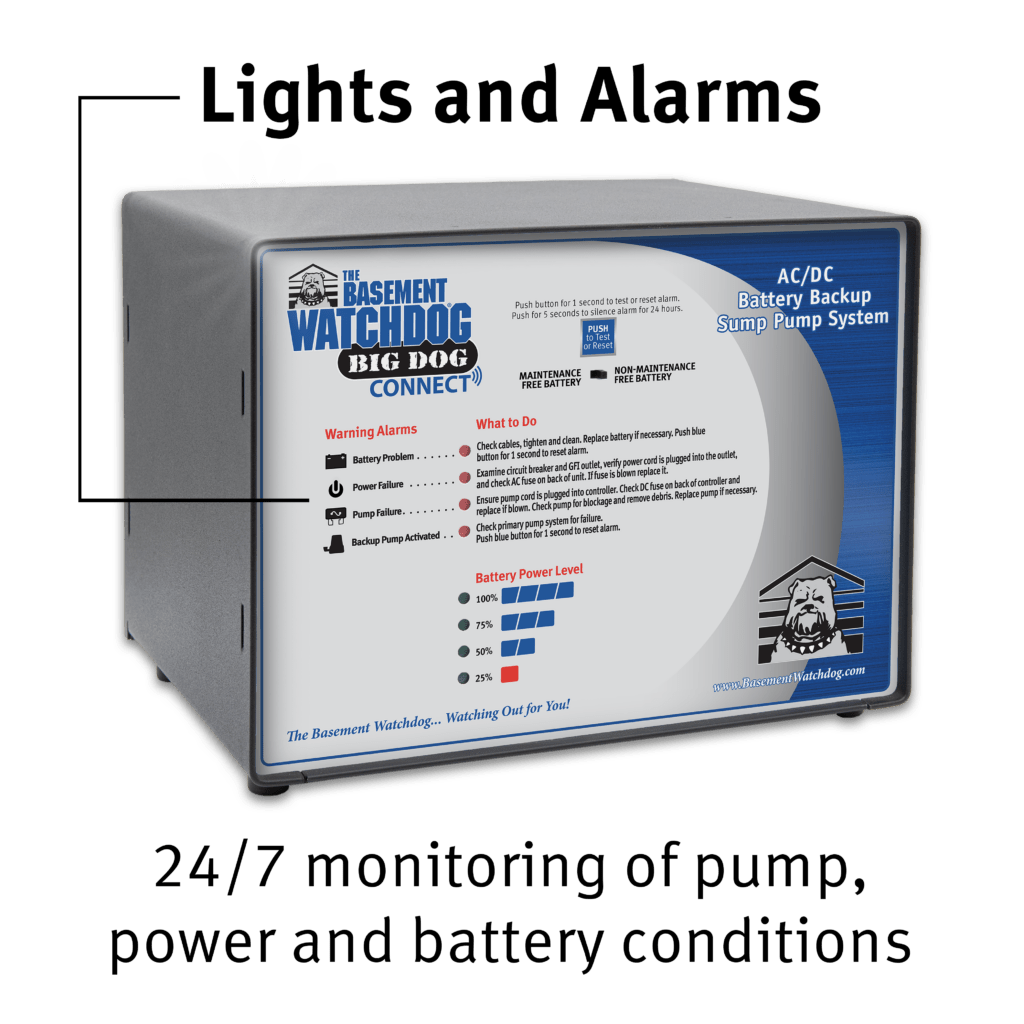
Start with Big Dog CONNECT
It has the highest published 10-foot output here at 36.7 GPM and the fastest charger at 20 amps. The Wi-Fi module and battery cost extra.
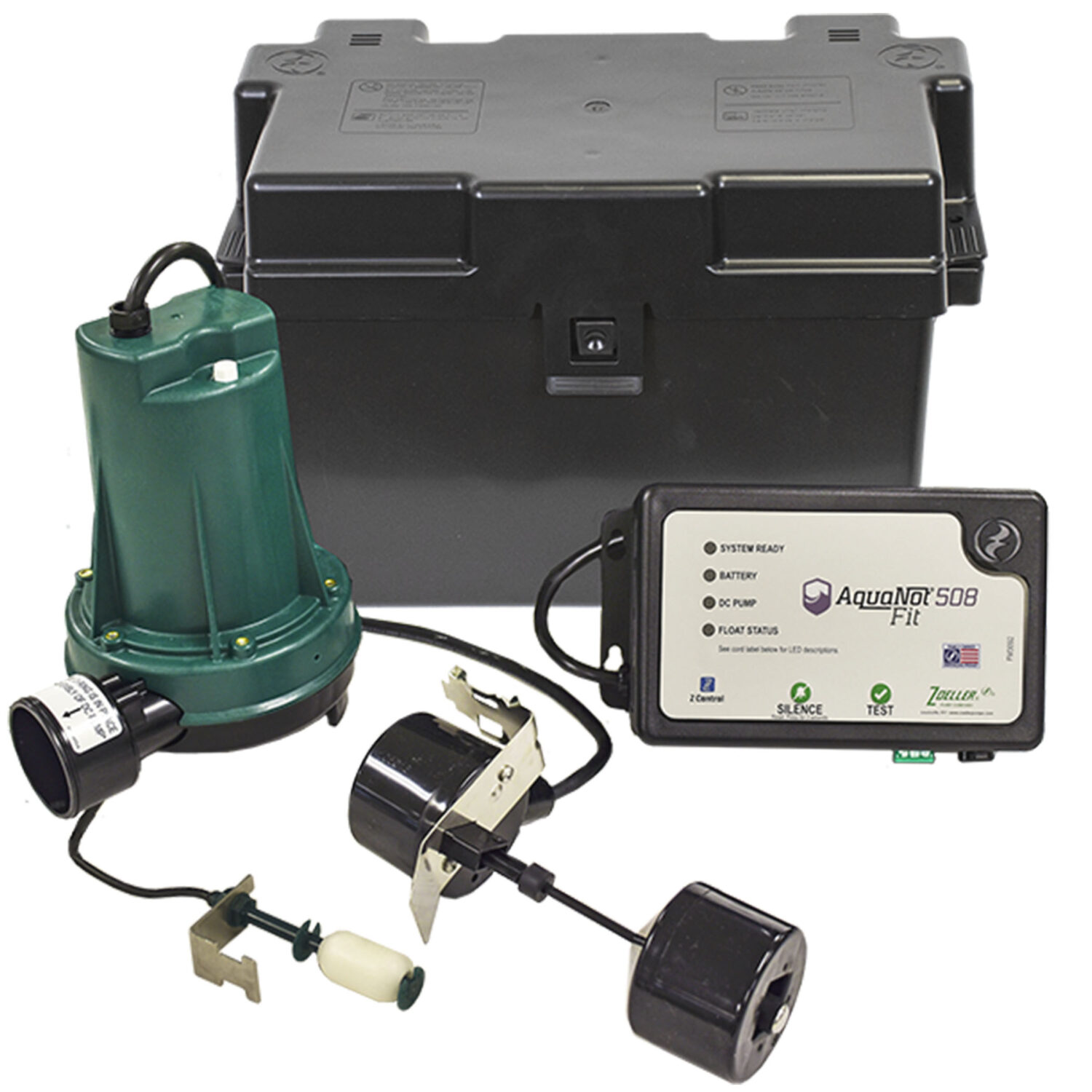
Start with Zoeller Fit 508
Built-in Wi-Fi, self-testing, and detailed fault alerts make it the strongest fit from published specifications when nobody is nearby to hear an alarm.
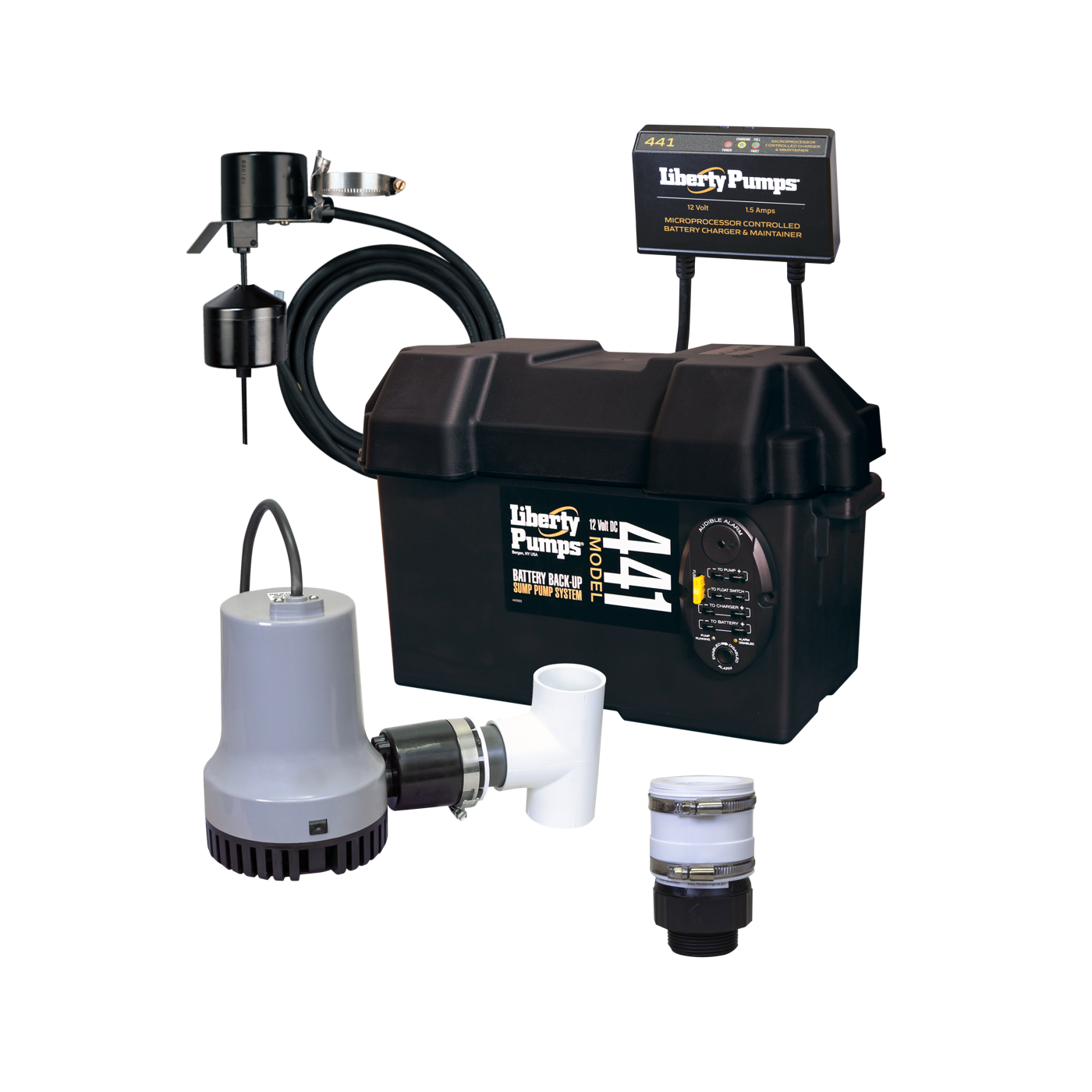
Start with Liberty 441
It covers the core pump, battery, charger, and local-alarm job without an app. Its published output and standard charger are the lowest of these three.
For remote monitoring
Zoeller Aquanot Fit 508
Model 508-0014
Choose this path when remote visibility matters as much as pumping capacity. The controller connects without requiring a separate Wi-Fi accessory.
- 30 GPM at 10 feet of lift at the published 12.1-volt test condition
- 7-amp controller with automatic self-testing and built-in Z Control Wi-Fi
- About 5.5 hours of continuous pumping with the manufacturer's 175-minute reserve-capacity reference battery
- Requires a separately purchased 12V deep-cycle lead-acid battery; Group 27 minimum and a case that fits Group 27, 29, or 31
- Three-year pump warranty; the current technical sheet also states a three-year battery warranty for the specified Zoeller battery
For faster inflow
Basement Watchdog Big Dog CONNECT
Model BWD12-120C
Choose this path when water enters quickly or repeated storm cycles make fast battery recovery important.
- 36.7 GPM at 10 feet of lift, published directly by the manufacturer
- 20-amp multistage charger and automatic weekly pump exercise
- Published runtime of 40 hours at a 10% duty cycle with one BW-27AGM battery, or 80 hours with two
- Dual float switch plus local fault monitoring; optional BW-WiFi2 module adds remote alerts
- Compatible with separately purchased AGM or wet-cell lead-acid batteries; BW-27AGM is the preferred match
- Two-year base warranty with manufacturer conditions that can extend pump coverage to four years
For a simpler local backup
Liberty Pumps 441
Model 441 with 1.5-amp charger
Choose this path when you want a straightforward local system and the measured water load fits its lower published output.
- 21.7 GPM at 10 feet of lift at the published 12.1-volt test condition
- Standard Model 441 includes a 1.5-amp charger; the faster 10-amp charger belongs to the separate 441-10A model
- Published runtime of 4.25 hours continuously or up to six days under Liberty's stated intermittent-use test
- Requires a separately purchased Group 27 or 31 deep-cycle AGM or wet-cell lead-acid battery
- Three-year pump warranty; Liberty states one year for its StormCell battery
Compare systems
Compare the three systems on the numbers that matter
How to read this comparison: Output is normalized to the manufacturer's published GPM (Gallons Per Minute) at 10 feet of lift. Zoeller and Liberty state a 12.1-volt test condition. Basement Watchdog publishes 36.7 GPM at 10 feet but does not state voltage on the public product page.
Budget the full purchase
What the pump price does not tell you
A useful quote separates the equipment, battery, accessories, plumbing or electrical changes, and labor. That makes two bids easier to compare and prevents a lower box price from becoming the more expensive installed system.
Pump and controller kit
Confirm the pump, controller, float switch, battery box, check valve, fittings, and charger that are actually included.
Required battery
Every system in this shortlist requires a separate 12V deep-cycle lead-acid battery. Record the exact group size and reserve capacity.
Optional protection
Remote-alert modules, a second battery, extra battery case, jumper cable, and separate discharge piping can materially change the total.
Installation and handoff
Budget for plumbing changes, electrical work when required, a full power-off test, alert setup, and an explanation of future testing.
Just moved in? Add the pump, discharge, battery, and test schedule to the new homeowner first-90-days checklist
Installation plan
What a complete installation should include
The goal is not simply to make the backup pump turn on. A complete installation keeps both pumps serviceable, gives each float room to move, sends water safely away from the house, and shows the homeowner exactly how the system responds when primary power is removed.
- 1A layout both pumps can use
The backup pump and float should not block the primary pump, interfere with either switch, or make routine service difficult.
- 2A clear route out of the house
Confirm the required check valves, pipe size, fittings, and exterior outlet. Water should leave the foundation instead of cycling back toward it.
- 3A protected battery and controller
Use the approved battery type and capacity. Keep the battery secured and the controller dry, accessible, and connected to the correct outlet.
- 4A homeowner handoff test
Remove primary power, activate the backup safely, verify water movement and every promised alert, then show how to test and silence the system.
Do not reach into a wet, energized sump pit or improvise electrical work. Use the manufacturer's test procedure and qualified help when plumbing, wiring, a crowded basin, or unusually fast water is involved.
Questions homeowners ask
Battery backup sump pump FAQ
How many GPM do I need?
Choose output at your actual lift that exceeds the rate water enters the pit during a heavy storm. If you cannot measure that confidently, ask an installer to size it from the pit, cycle rate, discharge route, and primary pump.
How long will the battery run?
There is no universal answer. Runtime changes with battery reserve, pump load, lift, battery age, and how often the pump cycles. Compare claims only when their test conditions are similar.
Does the battery come with the system?
Not with any of the three systems compared here. Budget for the manufacturer-approved battery and check whether the battery changes the pump warranty.
AGM or wet-cell battery?
AGM batteries are sealed and require less routine attention. Wet-cell batteries may require fluid checks. Use only a type and capacity approved by the pump manufacturer.
Can a generator replace the backup?
A generator helps during an outage, but a separate backup pump can also respond when the primary pump, switch, or circuit fails. Homes with serious water exposure may benefit from both layers.
When should I hire a professional?
Bring in a sump-pump installer when the pit is crowded, water enters quickly, the discharge needs modification, electrical work is required, or you cannot verify the system with a safe test.
Sources and review status
Homekeepr checked product details against manufacturer materials available July 21, 2026 and normalized the primary flow comparison to 10 feet of lift. Specifications, accessories, and warranties can change; verify the current manual before purchasing.
Zoeller Aquanot Fit 508 product page Zoeller 2025 technical data sheet Basement Watchdog Big Dog CONNECT specifications Basement Watchdog BW-27AGM battery specifications Liberty Pumps Model 441 product page Liberty Pumps Model 441 installation manualReview status: Homekeepr compared current manufacturer documentation and normalized published flow at 10 feet. We have not completed hands-on or licensed-installer testing, so these are researched options rather than hands-on endorsements.