Quick answer
Do a little every month, then prepare one season ahead.
A useful maintenance schedule is not a list of 100 chores for the first warm Saturday. It is a short monthly reset, a handful of seasonal jobs, and a separate plan for equipment with its own service interval.
Start with safety devices, water, heating and cooling, roof drainage, and anything that can quietly cause damage. Cosmetic work can wait. If a task requires climbing, opening electrical equipment, handling fuel, or diagnosing a leak, use a qualified professional.
Every month
The five-minute checks that catch slow problems
Test alarms
Use the test button on smoke and carbon-monoxide alarms. A successful beep confirms the electronics and sounder, not the age of the sensor, so record replacement dates too.
Look for water
Check under sinks, around toilets, near the water heater, at the washing machine, and beside the sump pit. New stains, swelling, corrosion, or musty odor deserve attention.
Check the HVAC filter
Inspect monthly and replace when loaded or at the interval specified for the filter and system. A one-inch filter usually needs attention more often than deeper media.
Run rarely used water
Flush a guest toilet and run water in little-used sinks and tubs. This keeps traps filled and reveals slow drains before guests arrive.
Month by month
High-level annual home maintenance calendar
Shift outdoor tasks by a month or two to match your climate. The point is to complete weather-sensitive work before the weather arrives.
Start with safety and records
- Test alarms and check manufacture dates.
- Find the main water shutoff and make sure it turns.
- Review warranties and expected replacement years.
- Look for window condensation and attic frost in cold climates.
Water and bathrooms
- Check toilets for silent leaks with food coloring.
- Clean exhaust-fan covers and verify airflow.
- Inspect sink supply lines and drain traps.
- Review the water-heater age and any rust or seepage.
Spring drainage
- Test the sump pump with water before heavy rain.
- Walk the yard for standing water and settlement.
- Inspect gutters and downspout discharge from the ground.
- Schedule cooling service before the first hot week.
Exterior reset
- Check roof, siding, trim, and flashing from the ground.
- Reconnect hoses after freeze risk passes.
- Clean dryer ducting and exterior flap.
- Inspect decks, steps, rails, and walkways.
Cooling and storm season
- Clear leaves and growth around outdoor HVAC equipment.
- Test GFCI outlets and exterior lighting.
- Review generator fuel, oil, cords, and safe operating location.
- Photograph high-value rooms and equipment for records.
Comfort and pests
- Reverse ceiling fans for summer if appropriate.
- Inspect door sweeps and screens.
- Look for pest entry around pipes and foundation gaps.
- Clean refrigerator coils if the manual calls for it.
Midyear water check
- Watch the water bill for an unexplained increase.
- Check irrigation heads and watering schedule.
- Clean dehumidifier filters and verify continuous drainage.
- Review basement humidity after several wet days.
Plan fall work
- Book heating service before contractor schedules fill.
- Check weatherstripping and door alignment.
- Inspect exterior caulk around penetrations.
- Price roof or tree work before storm season peaks.
Heating and fire safety
- Service heating equipment and replace filters.
- Have chimneys and fuel-burning appliances inspected as needed.
- Check fire extinguishers for correct location and condition.
- Clean and store window air conditioners safely.
Freeze protection
- Disconnect hoses and winterize exterior plumbing.
- Clear gutters after leaf drop.
- Seal obvious drafts without blocking required ventilation.
- Confirm snow tools, ice melt, and generator supplies.
Holiday load check
- Inspect cords and do not overload outlets.
- Clean the range hood and kitchen exhaust path.
- Check dishwasher filter and disposal splash guard.
- Confirm shutoff valves before overnight guests arrive.
Close the year
- Review completed work and open issues.
- Update equipment ages, costs, and contractor contacts.
- Set next year's maintenance reserve.
- Schedule work that is easier during the contractor off-season.
System intervals
Some equipment follows its own clock
| System | Homeowner check | Planning interval | Related guide |
|---|---|---|---|
| Water heater | Leaks, rust, unusual sound, hot-water changes | Record age now; tank units often plan around an 8-12 year life | Find its age |
| Roof | Ground-level visual check after major weather | Professional inspection when damage, leaks, or lifecycle risk appears | Roof guide coming soon |
| Private well | Change in taste, odor, color, flow, or nearby conditions | At least annual lab testing for core parameters | Well guide coming soon |
| Vacation home | Temperature, water, power, fuel, and local check-in status | Opening, every departure, and between visits | Vacation-home guide coming soon |
Home maintenance FAQ
How to keep the calendar realistic
How much time should home maintenance take each month?
Reserve 30 to 60 minutes for routine checks and one longer block for the month's featured work. Larger projects belong on a planned list with a budget, not crammed into the monthly reset.
Should I follow the calendar or the manufacturer's manual?
Use the manufacturer's manual for equipment-specific service. The calendar is a reminder to inspect and plan; it does not override model-specific instructions or local code.
What should a homeowner do first?
Start with alarms, water shutoffs, active leaks, heating and cooling, roof drainage, and electrical hazards. Those items can affect life safety or create damage while they are ignored.
Make the calendar fit your house
Want a personalized list for what your exact property needs?
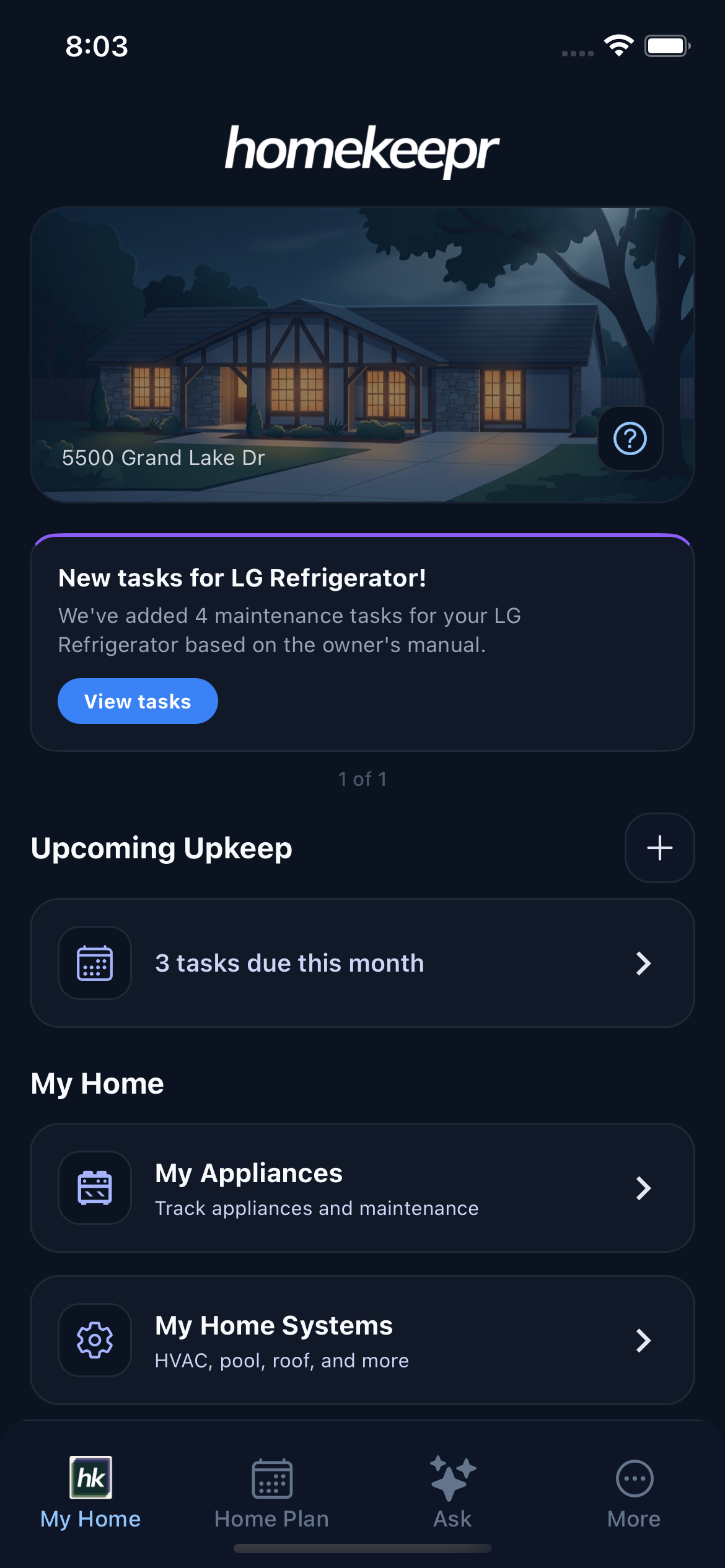
Homekeepr uses your home information, location, and the specifications of your home to let you know exactly what needs to happen and when. Subscribe now for just $50/year.
Get Homekeepr for your house