
Start here
Check the rooms people sleep in, then work through every level.
Smoke alarms belong inside every bedroom, outside each separate sleeping area and on every level of the home, including the basement. For fire extinguishers, one on each level is a practical starting point; the kitchen, garage and other risk areas deserve a closer look.
The alarm locations come from USFA’s smoke-alarm guidance. The Red Cross recommends considering an extinguisher on every level. Your home’s layout, equipment instructions and local requirements determine the final plan.
Smoke alarms
You probably have too few alarms in your home
Start a simple list: each bedroom, the space outside each separate sleeping area and every level. A hallway alarm can cover the area outside a group of bedrooms and that level, but it does not replace the alarms inside those bedrooms. Separated sleeping wings or an unusual layout can need more locations.
| Location | Starting count |
|---|---|
| Inside three bedrooms | 3 |
| Shared upstairs hall outside those bedrooms | 1 |
| Main floor | 1 |
| Basement | 1 |
| Total for this example | 6 smoke-alarm locations |
This is Homekeepr’s worked example of USFA placement guidance, not a floor plan approval. Check the manufacturer’s placement instructions and ask your local fire department about local requirements.
Interconnected alarms can sound together when one detects a problem. Before replacing a unit, match its power source and the documented compatibility of the entire alarm network. A similar shape or matching plug does not establish compatibility. Have a qualified electrician handle hardwired alarm work.
Smoke and carbon monoxide need their own coverage.
A smoke alarm detects smoke; a CO alarm detects carbon monoxide. A combination unit can perform both jobs, but its location still has to satisfy both sets of instructions. CPSC recommends CO alarms on each level and outside sleeping areas. Confirm the specific placement for your home and fuel-burning equipment with the manual and local fire department.
If anyone in the household may not hear a standard alarm, discuss the right accessible alarm equipment and the escape plan with your local fire department. USFA describes alarms with flashing lights or vibration.
Fire extinguishers
Make each extinguisher easy to reach with a way out behind you.
For a three-level home, the one-per-level starting point means three extinguishers to plan for. Then check access from the kitchen, garage or workshop. A unit hidden in the basement does little for someone who would have to pass a fire to reach it.
The Red Cross advises mounting extinguishers near an exit and away from heat sources. Follow the mounting instructions and keep the path clear. For the kitchen, choose a location you can reach without moving toward the stove if a fire starts.
Dates worth keeping
Use the schedule for the alarm you actually own.
Use each alarm’s manual for testing and replacement dates—the First Alert SMCO100V-AC, for example, requires weekly tests. Record the model, location and replace-by date; smoke alarms generally need replacement ten years after manufacture, while CO and combination units follow their own service life. Check extinguisher access, pressure and condition as instructed, and save the next check in Homekeepr. Replace an alarm that fails a test or reaches end of life.
Add a reminder in HomekeeprA reason to check the kitchen, too
Cooking accounts for nearly half of residential building fires.
USFA estimates that there were 343,000 residential building fires in 2024, with 46.7% attributed to cooking. These are national estimates, not a prediction for an individual home. Source: USFA’s residential-building fire estimates.
As you check the equipment, clear combustible clutter from cooking and heating areas and make sure doors and windows on the escape route can be opened. Walk the plan with everyone in the home, including anyone who will need help getting out. USFA recommends two ways out of each room and an outdoor meeting place.
Your home safety walk-through
Leave the walk-through with a list you can use.
Questions homeowners ask
Alarm and extinguisher questions
How many smoke alarms does a three-bedroom home need?
Count each bedroom, each separate sleeping area and every level. For example, a home with three upstairs bedrooms opening onto one shared hall, a main floor and a basement starts with six alarm locations: three bedrooms, the upstairs hall, the main floor and the basement. A different layout can need additional coverage; check local requirements and the alarm instructions.
Can I keep the kitchen extinguisher right next to the stove?
Choose a visible, accessible location near an exit and away from heat sources, following its mounting instructions. You should be able to reach it without moving toward the fire and keep an escape route behind you.
Does a combination smoke and CO alarm cover both needs?
Only if the exact unit provides both functions and is installed in a location that satisfies the placement instructions for both. Match its power supply and any interconnection requirements. Smoke and CO alarms have different jobs; one function does not replace the other.
Is testing alarms once a month enough?
Follow the exact model’s instructions. USFA gives a general monthly reminder, but some models need more frequent tests. The First Alert SMCO100V-AC manual, for example, specifies weekly testing. Record the interval for each model rather than applying one schedule to every alarm.
Homekeepr Recommends
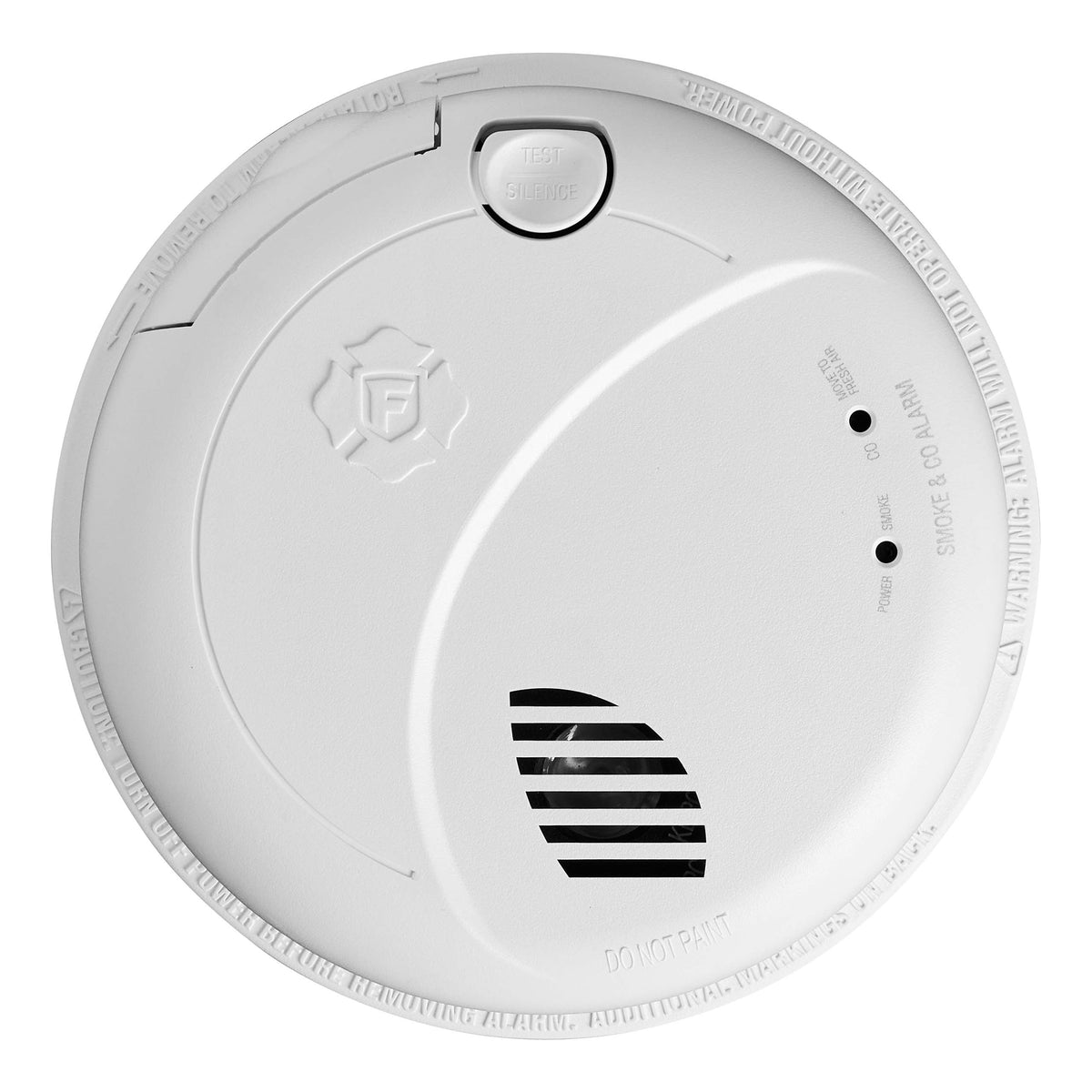
Find the alarms that fit your home.
Compare smoke and carbon monoxide alarms by power source, interconnection and the equipment already in your home.
See Homekeepr’s alarm picksShown: First Alert SMCO100V-AC. Image: First Alert / Resideo.Homekeepr may earn a commission from purchases through links in the guide, at no additional cost to you.