Quick answer
How do I winterize my house?
Protect the plumbing first, then the heat, the roof and gutters, and your safety gear. Disconnect hoses and drain outdoor faucets, insulate exposed pipes, service the furnace, clear the gutters, and test smoke and carbon monoxide alarms. If the house will sit empty, keep the heat at 55°F or higher, or shut off and drain the water.
Do the outdoor work before the first hard freeze in your area. Most of the list takes an afternoon, and the expensive failures it prevents, such as a burst pipe inside a wall, rarely give much warning.
Before the first hard freeze
Home winterization checklist by area
For alarms, see our guide to smoke and carbon monoxide detectors. For outages, use the severe storm preparation checklist. For the rest of the year, the month-by-month maintenance schedule picks up where this list ends.
Empty houses
What temperature should I leave a vacant house at in winter?
Keep the heat at 55°F or higher. State Farm says to set the thermostat no lower than 55°F when you are away, and Amica recommends 55°F or higher for a vacant home.
Treat 55°F as a floor, not a guarantee. Amica notes that it may not prevent freezing in extreme cold or where pipes run through exterior walls, so homes with exposed plumbing may need more. Amica also says homeowners policies generally cover freeze damage only when reasonable care was taken to maintain heat, so check your own policy.
- Have someone check the house. State Farm suggests a friend or neighbor check daily that it is staying warm. Remote temperature and leak sensors help between visits.
- If the heat will be off, shut off and drain the water. Amica recommends shutting off the water and having the plumbing drained or blown out. State Farm notes that shutting off the water may also turn off a fire sprinkler system.
- Open cabinet doors under sinks on exterior walls so warm air reaches the pipes.
Second homes
Winterizing a vacation home
A vacation home needs a decision before the season, not a scramble at the end of the last visit: keep the heat on and monitor the house, or shut off and drain the water with a plumber's help. Write the choice down so every closing follows the same steps.
Our vacation home opening, closing, and between-visit checklist covers the full departure routine. The guide to monitoring and protecting a vacation home compares sensors that alert you when the temperature drops or water appears.
Weather-aware reminders
Hear about the cold snap before it reaches the pipes.
Homekeepr watches local forecasts and sends alerts tailored to your home, such as winterizing pipes or protecting the HVAC system before a storm, so the checklist happens when the weather calls for it.
Get winter alerts for my home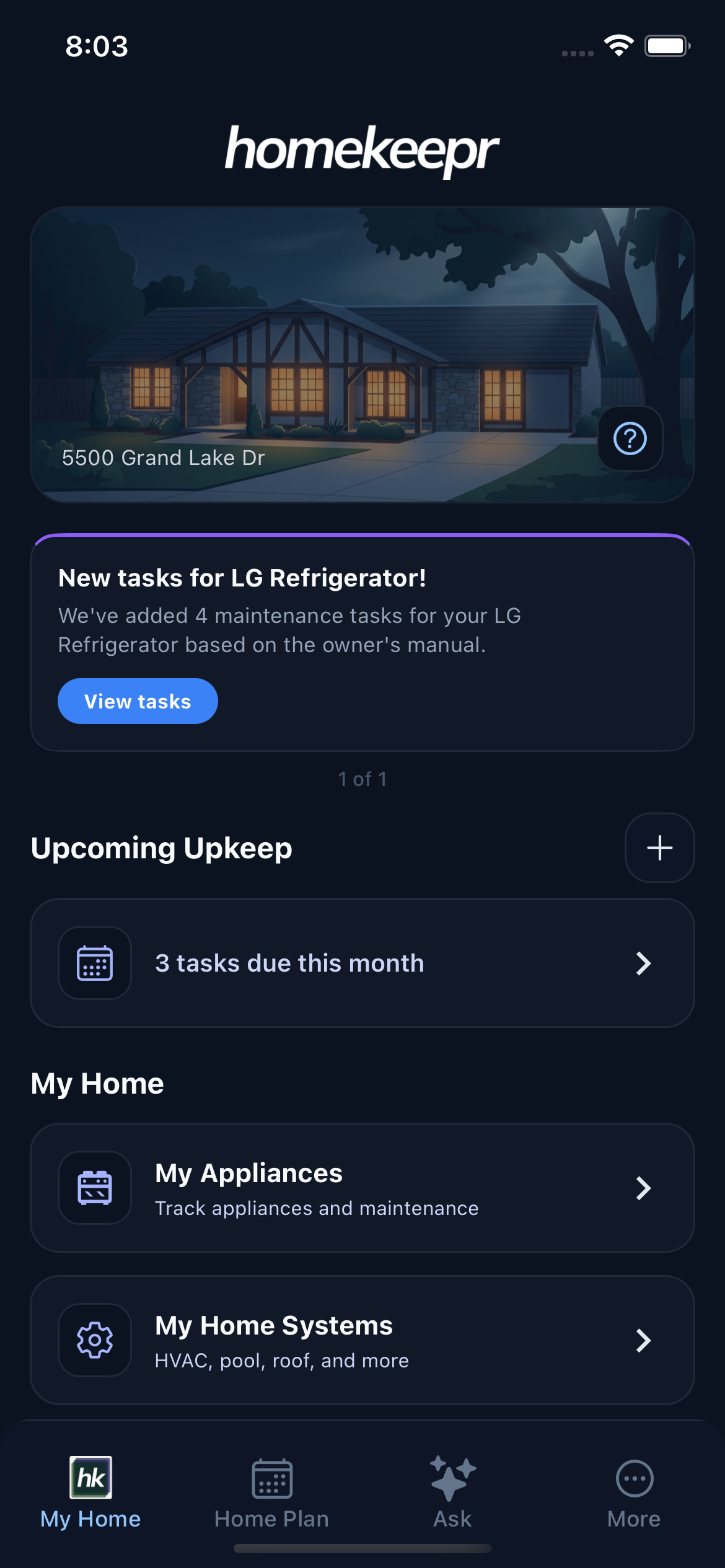
Winterization FAQ
Questions homeowners ask before winter
When should I winterize my house?
Before the first hard freeze where you live. Disconnect hoses and drain outdoor faucets in the fall, and finish the heating service before the cold season.
What temperature should I keep my house at when I'm away in winter?
No lower than 55°F, according to State Farm and Amica. Go higher if pipes run through exterior walls or the forecast calls for extreme cold.
Should I turn off the water if I leave for the winter?
If the heat will be off or the house will sit empty for a long time, shut off the water and have the plumbing drained or blown out. Shutting off the water may also turn off a fire sprinkler system.
Should I let my faucets drip in freezing weather?
During a cold snap, State Farm suggests letting an indoor faucet on an exterior wall drip slowly overnight to help keep the pipe from freezing.
Do I need to winterize in a mild climate?
A lighter version, yes. State Farm notes that insulating pipes in crawl spaces and attics helps even in mild climates, where a rare freeze catches houses unprepared.
Sources
Reviewed October 29, 2026. Your insurance policy and local plumbing professionals have the final word for your home.
State Farm: Winter prep 101, essential tips to prevent frozen pipes (December 20, 2024)Amica Insurance: Ideal winter temperature for a vacant house