Quick answer
How long does a furnace last?
Most furnaces last 15 to 25 years with regular maintenance, according to InterNACHI's life expectancy chart. ENERGY STAR suggests considering a replacement once a furnace is more than 15 years old, especially when it needs frequent repairs, your energy bills are climbing, or some rooms stay too hot or too cold.
Age is a planning signal, not a deadline. A well-serviced 18-year-old furnace can keep running safely, while a neglected 10-year-old one can be on its way out. What you want is enough warning to replace it on your schedule, with time for quotes, instead of in an emergency.
Planning ranges
Typical furnace and heating system lifespan by type
These ranges come from InterNACHI's Standard Estimated Life Expectancy Chart for Homes, which assumes regular recommended maintenance. InterNACHI notes that life expectancy varies with usage, weather, installation, maintenance, and the quality of the equipment, and that the figures are guidelines, not guarantees.
InterNACHI's chart doesn't separate gas, oil, and electric furnaces, so treat 15 to 25 years as the range for all of them. If the furnace shares ductwork with a central air conditioner or heat pump, check both ages. When both are near the end, ask for quotes on replacing them separately and together.
Find the label
How to find your furnace's age
Look for the rating plate, a metal or foil label with the model and serial numbers. On most furnaces it sits on the cabinet or inside the blower compartment door. Some plates print the manufacture date outright; many hide it inside the serial number.
- Turn the furnace off before opening any panel. Use the switch on or near the furnace. Read only labels you can see without tools, and leave burner covers and wiring alone.
- Photograph the rating plate straight on. A clear photo of the model and serial numbers is all a manufacturer or technician needs.
- Decode the serial number with the brand. Each manufacturer encodes the date its own way, and some formats have changed over the decades. Search the brand's support site or call it with the model and serial numbers. Our water heater age guide shows how these codes usually work.
- Check the paperwork. An installer's sticker, a permit, a service invoice, or your home inspection report often lists the installation year, which can be months or years after the manufacture date.
Write the age and model number somewhere you'll find them during a breakdown. A technician who knows the model before arriving is more likely to bring the right part.
Every year
Annual furnace maintenance checklist
ENERGY STAR's maintenance checklist boils down to two habits: check the air filter every month, and book a heating check-up every fall, before contractors get busy.
The full year of upkeep, including the cooling check-up in spring, is in our month-by-month home maintenance schedule. Before the first freeze, the winterization checklist covers the pipes and the rest of the house.
What to watch
Signs your furnace is wearing out
ENERGY STAR's signs that heating equipment may need replacing are practical ones: frequent repairs alongside rising energy bills, rooms that stay too hot or too cold, a system that has gotten noisy, and a furnace more than 15 years old.
- Repairs are getting more frequent. One repair on an old furnace is normal. A second or third in a couple of seasons is the pattern ENERGY STAR describes.
- Bills are rising without a colder winter. Compare the same months across years. A furnace losing efficiency costs more to run before it stops running.
- Some rooms never get comfortable. Uneven heat can come from ducts or insulation, so ask the technician to check airflow before you blame the furnace.
- New noises. Banging, squealing, or rattling deserves a service call, not a wait-and-see.
- The carbon monoxide alarm goes off. Get everyone outside to fresh air right away and call 911, as the CPSC advises, then have the furnace inspected before you use it again.
Repair or replace
Should I repair or replace my furnace?
Repair a furnace that is under about 15 years old with an isolated problem. Start getting replacement quotes when it is past 15, needs frequent repairs, or the repair would cost more than half the price of a new furnace. Treat any safety finding as its own decision.
Is it a safety problem?
If the technician finds a cracked heat exchanger, a gas leak, or a venting problem, follow their shutdown advice and get the diagnosis in writing.
Is the furnace young and the failure contained?
An igniter, flame sensor, blower motor, or control board on a younger furnace is often worth repairing. Check whether the part is still under warranty before you pay.
Is the repair more than half the price of a new furnace?
Compare the full repair bill with an installed replacement quote. Our 50% rule guide has a calculator.
Is an older furnace pushing your bills up?
ENERGY STAR says a certified furnace is 15% more efficient than a conventional one, so the savings belong in the comparison.
Get two written quotes before winter forces your hand, and ask what each includes, such as removal, permits, and changes to venting or ductwork.
For the bigger picture of which systems are due when, the home maintenance budget calculator helps you start saving before the replacement arrives.
Know the age before it matters
Photograph the rating plate once. Plan the replacement on your schedule.
Homekeepr builds a living record of your home from an address and a few photos, including systems like the furnace. It keeps manuals and warranties on hand, puts the yearly service on your maintenance plan, and plans for replacements before they become emergencies.
Track my furnace in Homekeepr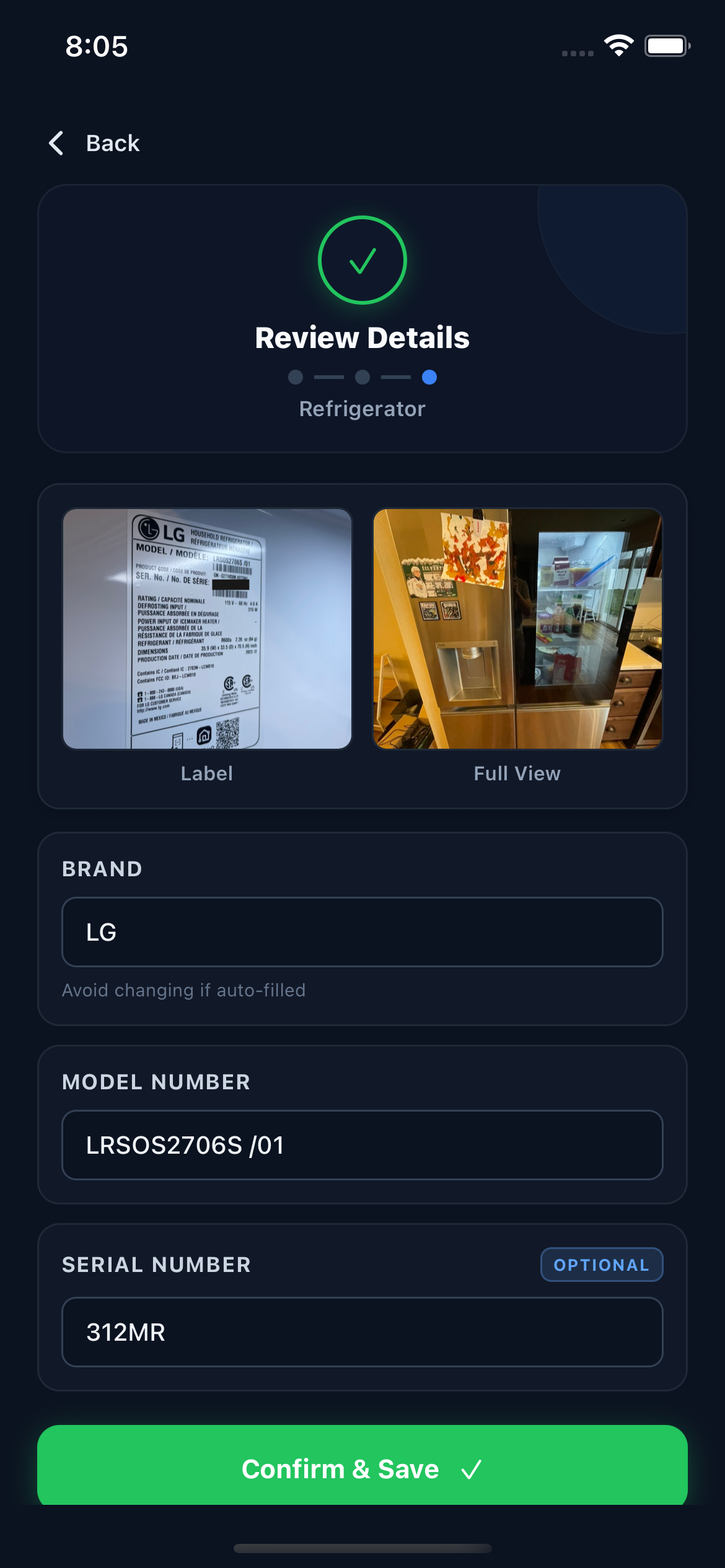
Furnace FAQ
Questions homeowners ask about furnace lifespan
How long does a gas furnace last?
InterNACHI puts a furnace's typical life at 15 to 25 years with regular maintenance. Its chart doesn't separate gas, oil, and electric models, so plan around the same range for each.
Should I replace a 20-year-old furnace?
Not automatically. If it runs safely, heats evenly, and rarely needs repairs, keep it serviced and start saving. If repairs are adding up or the bills keep climbing, get replacement quotes now rather than during a cold snap.
How often should a furnace be serviced?
Once a year, before the heating season. ENERGY STAR recommends a fall check-up by a contractor, plus checking the air filter every month.
What is the 50% rule for a furnace?
If a repair would cost more than half the price of a new furnace, and the furnace is past the middle of its expected life, replacement usually makes more sense. Safety findings override the rule.
How do I tell how old my furnace is?
Find the rating plate on the cabinet or inside the blower door, photograph the model and serial numbers, and look up the date code with the manufacturer. Installer stickers, permits, and invoices can show the installation year.
Sources
Reviewed October 29, 2026. Your HVAC technician and your furnace's manual have the final word for your equipment.
InterNACHI: Standard Estimated Life Expectancy Chart for HomesENERGY STAR: When is it time to replace?ENERGY STAR: Maintenance checklistU.S. Consumer Product Safety Commission: Carbon monoxide