Quick answer
What should I do with my home inspection report?
Read the summary, then sort every finding into four groups: safety, water, systems near the end of their life, and cosmetic. Before closing, use the first three to decide on repair requests, credits, or specialist inspections. After closing, turn what remains into a dated plan so nothing waits for a failure.
Know what the report is and is not. Under the ASHI Standard of Practice, inspectors look at readily accessible, visually observable systems. They are not required to estimate how long a system will last, what a correction will cost, or whether the house meets current code. Big decisions need a specialist's opinion and a real quote.
Step one
Sort every finding: safety, water, systems, cosmetic
Go through the report once with four labels. Most findings fit cleanly in one group, and the order of the groups is the order of urgency.
Safety
Gas leaks or odors, carbon monoxide risks, exposed wiring, overheating panels, missing smoke or carbon monoxide alarms, and loose railings or stairs. Handle these first, with a licensed professional where the work calls for one.
Water
Active leaks, roof and flashing issues, failed caulk around tubs and windows, grading that slopes toward the house, and gutters that dump water at the foundation. Water damage compounds quietly, so these come right after safety.
Systems near the end of their life
An older roof, furnace, air conditioner, or water heater. These may work fine today. They need a budget and a replacement window, not a panic purchase. Our guides to roof lifespan and water heater age help you place them.
Cosmetic and minor
Worn finishes, sticky doors, missing outlet covers, and small drywall cracks. Real, but rarely urgent. Keep them on a later list so they don't crowd out the work above.
Before closing
Before closing: repair requests, credits, and specialist inspections
Your purchase contract sets how long you have to respond to the inspection, and your agent knows the deadline and local norms. Use that window for the items in the first three groups.
- Book specialists for anything the report flags for further evaluation. A roofer, HVAC technician, plumber, electrician, or structural engineer can confirm the cause, the options, and the price.
- Decide with your agent whether to ask for repairs, a credit, or a price change. A credit lets you choose who does the work. A seller repair should come with receipts and a chance to check the work before closing.
- Leave cosmetic items out of the negotiation. A short, well-supported request usually lands better than a list of everything in the report.
After closing
After closing: what to fix in the first 30, 90, and 365 days
Once the house is yours, the report becomes a work plan. Spread it over the first year so the urgent work happens first and the rest doesn't get lost.
| When | What belongs here | Examples |
|---|---|---|
| First 30 days | Safety items and anything actively leaking | Alarms installed and tested, electrical hazards corrected, active leaks stopped, main water shutoff located |
| First 90 days | Water management and overdue service | Gutters and downspouts, grading, caulk and sealant, furnace or AC service the report recommended, quotes for big items |
| First year | Planned replacements and lower-priority work | Replacement budget for systems near end of life, cosmetic repairs, a recheck of items the report said to monitor |
The new homeowner checklist for your first 90 days covers the rest of moving in, and the home maintenance budget calculator helps you size the replacement fund.
Turn the report into a plan
Let Homekeepr read the report for you.
Upload the PDF your inspector sent. Homekeepr reads the findings and turns them into tasks in your home's plan, each with a priority, timing, and cost you can sort by, and each linked back to the page of the report it came from. It also picks out the home systems the report mentions and asks you to confirm them.
See how inspection reports work in Homekeepr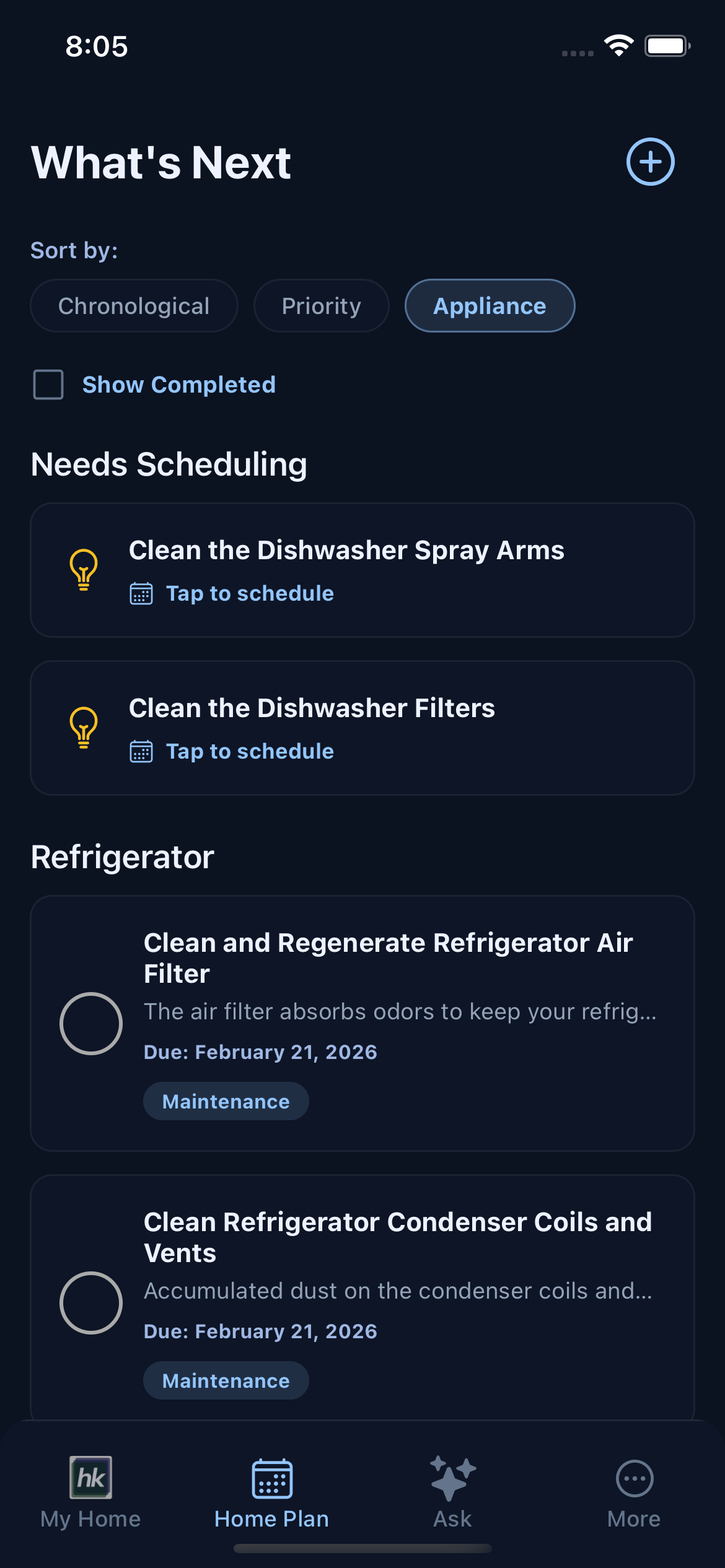
Home inspection FAQ
Questions homeowners ask after the inspection
How long do I have to act on a home inspection report?
Before closing, your purchase contract sets the deadline for inspection requests, and your agent can confirm it. After closing there is no deadline, but safety items and active leaks belong in the first month.
Do I need to fix everything in the home inspection report?
No. Handle safety and active water problems first, then plan for systems near the end of their life. Cosmetic and minor items can wait for a later list.
Should I ask the seller for repairs or a credit?
It depends on the deal and local practice, so decide with your agent. A credit lets you pick the contractor and check the work yourself. A seller repair should come with receipts and a chance to verify it before closing.
Does a home inspection tell me how long my roof or furnace will last?
Usually not. The ASHI Standard of Practice does not require inspectors to estimate remaining life or repair costs. Use the system's age, its condition, and a specialist's opinion to plan the replacement.
Is there an app that turns a home inspection report into a plan?
Yes. Homekeepr reads the PDF of your home inspection report and turns its findings into tasks in a maintenance plan for your home, on iPhone and Android.
Sources
Reviewed October 29, 2026.
American Society of Home Inspectors: Standard of Practice (sections 2.2 and 13.2)